Skip to content

Questions

Lecture 01 – Sets & Venn Diagram

Practice 01

  • Given: 80 students; Bangla pass 60, English pass 40, both 25.
  • Tasks:
    1. Pass in Bangla?
    2. Pass in English?
    3. Pass both / pass only two / pass at least two?
    4. Pass only Bangla / Bangla but fail English / fail English?
    5. Pass only English / English but fail Bangla / fail Bangla?
    6. Pass in total / pass at least one?
    7. Fail in total / fail both?
    8. Fail only one?
    9. Fail at least one?
    10. Fail at least two?

Practice 02

  • Given: Survey of 800 people; car only 280, bicycle only 220, both 140.
  • Tasks: a) Car only count b) Bicycle only count c) Neither d) At least one e) Only one

Practice 03

  • Given: Students liking languages — Java 80, C++ 60, Python 40; overlaps: Java & C++ 20, C++ & Python 25, Java & Python 20, all three 12.
  • Tasks:
    1. Number liking at least one
    2. Only Java
    3. Only C++
    4. Only Python

Lecture 02 – Mathematical Induction

Core Proof Tasks

  • Given/Tasks:
    1. Prove 1 + 2 + 3 + … + n = n(n + 1)/2
    2. For all n ≥ 1, prove 1 + 3 + 5 + … + (2n − 1) = n²
    3. For all n ≥ 1, prove 1³ + 2³ + 3³ + … + n³ = [n(n + 1)/2]²

Lecture 03 – Propositional Logic (Part 1)

Proposition Identification

  • Tasks: Decide if each is a proposition and its truth value.
  • Given:
    • Kolkata is in Bangladesh.
    • Do your homework on discrete mathematics?
    • Bangladesh wins the match by 3 wickets.
    • 23 is an even number.
    • X is an odd number.
    • 34 + 2 = 37
    • May Allah bless you!
    • Do it.
    • Do you know me?
    • What is your good name?
    • Hurrah! We have won the game.

AND Section

  • Given:
    1. p = “Swimming at the New Jersey shore is allowed”; q = “Sharks have been spotted near the shore”.
    2. p = “The election is decided”; q = “The votes have been counted”.
  • Tasks: Express p ∧ q in English for each.

Negation Section

  • Given:
    1. p = “The election is decided”; q = “The votes have been counted”.
    2. p = “Swimming at the New Jersey shore is allowed”; q = “Sharks have been spotted near the shore”.
  • Tasks:
    • For (1): a) ¬p b) ¬q
    • For (2): a) ¬q b) ¬q (duplicated in source)

Lecture 04 – Propositional Logic (Part 2)

Truth Table Practice

  • Tasks: Build truth tables for
    • ¬p ∧ (¬q ∨ r)
    • p ∨ (¬q ∧ ¬r)
    • ((p ∨ q) r) p
    • (¬q ∧ ¬r) (p → (q ∨ r))

Expression Trees

  • Tasks: Draw expression trees for
    • ¬p ∧ (¬q ∨ r)
    • p ∨ (¬q ∧ ¬r)
    • ((p ∨ q) r) p
    • (¬q ∧ ¬r) (p → (q ∨ r))

Combinational Circuits

  • Tasks:
    • Derive logical expressions from given circuits (see diagrams pages 15–16).
    • Draw a circuit for (p ∨ ¬r) ∧ (¬p ∨ (q ∨ ¬r)).

Word Problems → Logic + Circuit + Tree

  • Given:
    1. If Rakib eats rice then Rahim eats burger, or if it is raining then we are not going to the Bazar.
    2. If you work overtime → paid time-and-a-half; if Donald Trump wins 2024 election → becomes president.
  • Tasks (for each): Form logical statement, draw circuit, draw expression tree.

Logical Equivalence

  • Tasks:
    1. Show p → q ≡ ¬p ∨ q.
    2. Show ¬(p ∨ q) ≡ ¬p ∧ ¬q.

Lecture 05 – Propositional Logic (Part 3)

Tautology Checks

  • Tasks: Show each is a tautology
    1. (p → q) ∧ (q → r) → (p → r)
    2. (p ∨ q) ∧ (¬p ∨ r) → (q ∨ r)
    3. (p → q) → r and p → (q → r)
    4. (p ∧ q) → r and (p → r) ∧ (q → r)
    5. Determine whether (¬q ∧ (p → q)) → ¬p is a tautology.

Contradiction Checks

  • Tasks: Determine whether each is a contradiction
    1. (p → q) ∧ (q → r) → (p → r)
    2. (p ∨ q) ∧ (¬p ∨ r) → (q ∨ r)
    3. (p → q) → r and p → (q → r)
    4. (p ∧ q) → r and (p → r) ∧ (q → r)
    5. (¬q ∧ (p → q)) → ¬p
  • Notes: Same statements as above; focus here on contradiction status.

Lecture 07 & 08

  • Notes: PDFs contain theory only; no additional practice problems provided. Read Lectures 7 and 8 in the PDF.

Circuit Question

For each of the three circuits:

  • (a) Write the logical expression corresponding to the given combinational circuit

  • (b) Make a truth table and decide what kind of formula it is (tautology, contradiction, contingency)

Circuit 1

  • Tasks:
    • Write the logical expression
    • Make truth table
    • Classify formula

Circuit 2

  • Tasks:
    • Write the logical expression
    • Make truth table
    • Classify formula

Circuit 3

(Image from page 1)

Tasks:

  1. Write the logical expression
  2. Make truth table
  3. Classify formula

Pigeonhole Principle Question

  • (a) A box contains 8 yellow, 12 green, and 15 purple balls.

    • What is the minimum number of balls you must draw to guarantee having 5 balls of the same color?
  • (b) A drawer has 20 black socks, 20 white socks, and 20 brown socks. What is the minimum number of socks you must pull out to ensure having 4 socks of the same color?

(c) A bag contains 6 red marbles, 9 blue marbles, and 11 orange marbles.

What is the minimum number of marbles needed to guarantee selecting 3 marbles of the same color?

Relations Question

For each of the following relations on A = {1, 2, 3, 4}, determine whether the relation is Reflexive, Symmetric, and/or Transitive.

Set 1

R1 = { (1,2), (2,3), (3,4) }

R2 = { (1,1), (2,2), (3,3), (1,3), (3,1), (2,4) }

R3 = { (2,2), (3,3), (4,4), (1,4) }

R4 = { (1,1), (2,2), (3,3), (4,4), (1,2), (2,3), (3,1) }

R5 = { (1,1), (2,3), (3,2), (4,4) }

Set 2

Determine reflexive, symmetric, transitive:

R1 = { (1,4), (4,2), (2,3), (3,1) }

R2 = { (1,1), (2,2), (1,2), (2,1), (3,4) }

R3 = { (1,1), (2,2), (3,3), (4,4), (1,4), (4,3), (3,2) }

R4 = { (1,1), (2,2) }

R5 = { (1,2), (2,1), (3,4), (4,3) }

Set 3

Determine reflexive, symmetric, transitive:

R1 = { (1,3), (3,2), (2,1) }

R2 = { (1,1), (3,3), (4,4), (2,4), (4,2) }

R3 = { (1,2), (2,3), (3,4), (4,1) }

R4 = { (2,2), (3,3) }

R5 = { (1,1), (2,2), (3,3), (1,2), (2,3) }

Induction Question

This section provides no explicit statement, but you will be expected to:

  • Prove a given formula using mathematical induction The specific formula will be given by your teacher or assignment context.

Logical Proposition Question

There are three separate sentences, each requiring:

(a) Logical expression (b) Expression tree (c) Truth table + classify (tautology/contradiction/contingency) (d) Logic circuit diagram (e) Modify expression based on new condition

Problem 1

Sentence: “Either X or Y is true, but they cannot both be true.”

Tasks: (a) Logical expression (b) Expression tree (c) Truth table + classification (d) Circuit diagram (e) New expression if: “X or Y, and both may be true

Problem 2

Sentence: “If X is true then Y must be false, and at least one of them must be true.”

Tasks: (a) Logical expression (b) Expression tree (c) Truth table + classification (d) Logic circuit (e) Replace → with ↔ (“if and only if”)

Problem 3

Sentence: “X is true only if Y is false, and at least one of X or Y is false.”

Tasks: (a) Logical expression (b) Expression tree (c) Truth table + classification (d) Logic circuit (e) Replace “only if” with “if and only if”

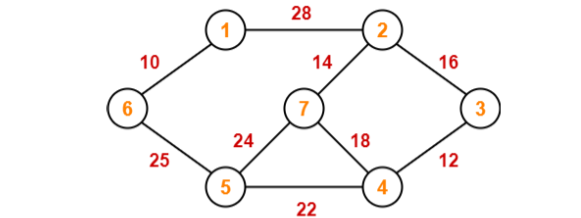
TSP Question

Set Problems Question

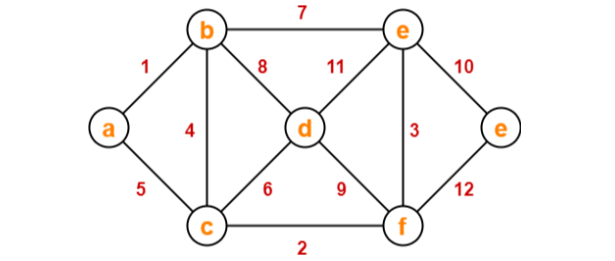
Given weighted graph (image on page 6):

Tasks: Find the minimum path and weight using TSP.

TSP Question

Set Problems Question

Problem 1

A group of people:

  • 50 like Football (F)
  • 40 like Cricket (C)
  • 35 like Basketball (B)
  • 15 like both F and C
  • 12 like both C and B
  • 10 like both F and B
  • 5 like all three

Find: (a) Number who like at least one sport (b) Number who like only Football (c) Number who like exactly two sports (d) Draw the Venn diagram

Problem 2

In a survey of 300 students:

  • 180 like Tea
  • 120 like Coffee
  • 70 like both

Find: (a) Tea only (b) Coffee only (c) Neither


IUS Preps - Your Academic Success Partner

Educational resources for IUS students.